
Knowledge
Why not every cable has a CPR class
Which cables fall outside EN 50575, why that differs from Fca, and what to report back when the specification demands a class for a type that has none.
Not every cable has a CPR class. EN 50575 covers cables permanently installed in construction works; flexible connection cable, machine wiring and offshore cable to NEK 606 fall outside it and get no class at all, not even Fca, because that is a class within the system. That is why more than a quarter of the types on this site carry no class. If a specification demands one anyway, another brand will not solve it.
Two questions get mixed up in specifications. The first: does this cable have a CPR class? That depends on the cable. The second: which class does this project require? That depends on where it will run. Keep them apart and you will not get stuck on a requirement that does not exist for that type.
The CPR and the cable standard EN 50575 cover cables that are permanently installed in construction works: wiring you cannot remove without building work. Wiring inside a machine falls outside, and a flexible connection cable with a plug or a clamp is not a construction product. Our H07BQ-F datasheet says so in so many words: outside the scope of EN 50575 (flexible connection cable).
No class is not the same as Fca. Fca is a class within the system: the cable falls under the CPR, but no performance has been determined or it does not meet the Eca requirement. A cable outside the scope gets no class at all, and no declaration of performance under EN 50575. So writing "Fca as a minimum" into a specification to let something through still asks for a cable that falls under the CPR.
That is why more than a quarter of the types on this site carry no class. Most of them are the flexible group in industrial and rubber cable: H05VV-F, H03VV-F, H07RN-F and H05Z1Z1-F. Then the ten offshore types to NEK 606, such as RFOU, BFOU, RU and BU, the British BS 6883 and the four Type P cables to IEEE 1580: a platform or a ship does not count as construction works, and those cables are class-approved by Lloyd’s, ABS or DNV. And two outdoor fibre cables with a PE sheath; for an indoor route with a CPR requirement, you take an LSZH cable.
The location then sets the requirement. Article 4.45a of the Bbl applies where the cable is exposed to indoor or outdoor air; if it is embedded in concrete or buried, no class requirement applies. An outdoor cable entering the building does come under the requirement indoors, as soon as it runs in air. That is exactly the borderline case with fibre: no requirement outside in the duct, a requirement from the entry point on.
Where we state no class and the datasheet names none either, the manufacturer has not declared one. We do not fill it in ourselves. For a few instrumentation and control types, such as LiHCH and LiHCH-TP, that is currently the case: their datasheet only says that, as a connection cable for mobile equipment, they fall outside EN 50575. If your project needs the class, say so with the enquiry and we will look into it for you.
For the buyer: if the specification demands a CPR class for a type that has none, another brand will not solve it. Report back which type it is and why the requirement does not apply there: flexible connection cable, machine wiring, offshore or buried. Then ask the author to adjust the requirement. That saves a round of quotations on a requirement nobody can meet.
Does the specification ask for a CPR class on a cable that has none? Send that line with the type. We find out whether the requirement applies in that location and which type does fit.
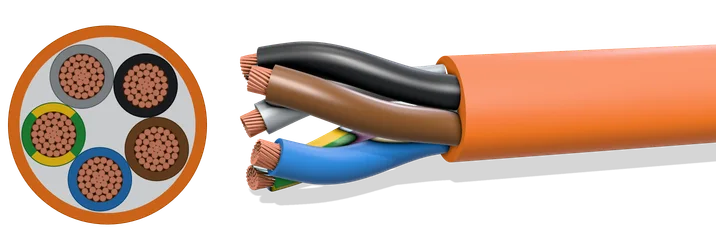
H07BQ-F
Flexible EPR/PUR rubber cable, class 5 Cu, 90 °C
Lead time: On request; the lead time is stated in the quote.
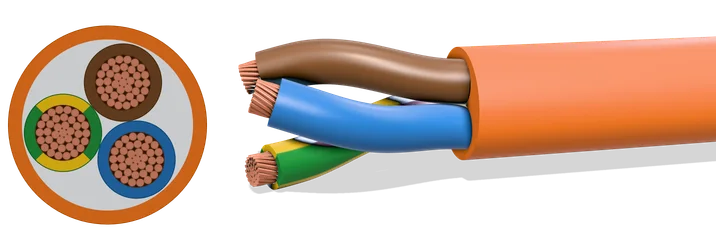
H05BQ-F
PUR-sheathed rubber flexible cable, 300/500 V
Lead time: On request; the lead time is stated in the quote.
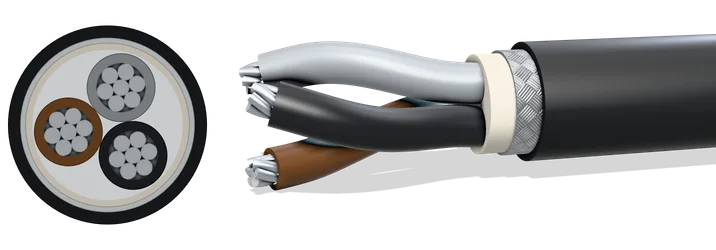
RFOU 0.6/1 kV
NEK 606 offshore power cable, halogen-free, braid armoured
Lead time: On request; the lead time is stated in the quote.